The Future of Indian Manufacturing and the Role of B2B Platforms
It is a critical juncture in the history of the development of Indian manufacturing. The sector has traditionally been labor-strong and has a wide range of industry but is now developing as a technology-oriented powerhouse. Manufacturing has been a substantial economic activity in India ever since it has helped to generate jobs, exports, and infrastructure development. It is also rapidly transforming to become an innovation centre, digital transformation centre and global collaboration today.
With the increasing competition and changes in the expectations of buyers, the manufacturers are rethinking their sourcing of materials, connection to buyers, and scaling operations, particularly those that are operating as my business locally. The emergence of B2B digital platforms is among the most powerful factors determining this change. These platforms are transforming the way the Indian manufacturers can connect with the markets which allows them to grow, gain visibility and sustainability in the long run.
The Changing Face of Indian Manufacturing
Indian manufacturing has in the past years ceased to be cost-oriented. Pricing now becomes less important as the other factors of quality, compliance, speed, and reliability are important. The support of government to domestic production and export has increased the pace of investment in production infrastructure, skill training, and adoption of technology.
However, challenges remain. Divided supply chains, lack of information transparency, and reliance on that aspect of old intermediaries continues to impede growth- especially that of SMEs and my local business manufacturers. Some find it hard to enter into new markets, bargain the right price or do procurements as it should. These challenges confirm a strong necessity of smarter and more connected business models.
The future of Indian manufacturing lies in the ability of businesses to adopt digital solutions that will help in streamlining their businesses as well as creating new opportunities.
Technology and Digital Transformation in Manufacturing
Technology is fast turning out to be the driver of growth in manufacturing. Indians are implementing automation, smart machinery, artificial intelligence, and data analytics, and changing the factory floor. Such innovations assist the manufacturers to become more productive, less wasteful and maintain the same standard of quality products.
However, there is more to digital transformation than production. Sales, procurement, inventory management and logistics are being handled out of digital tools. The change will allow producers to make informed choices and react fast to the market demand.

In the case of my local business, it is not possible to use digital platforms in an optional manner anymore. It is a competitive action that defines competitiveness in an ever-linked industrial environment.
Understanding the Role of B2B Platforms
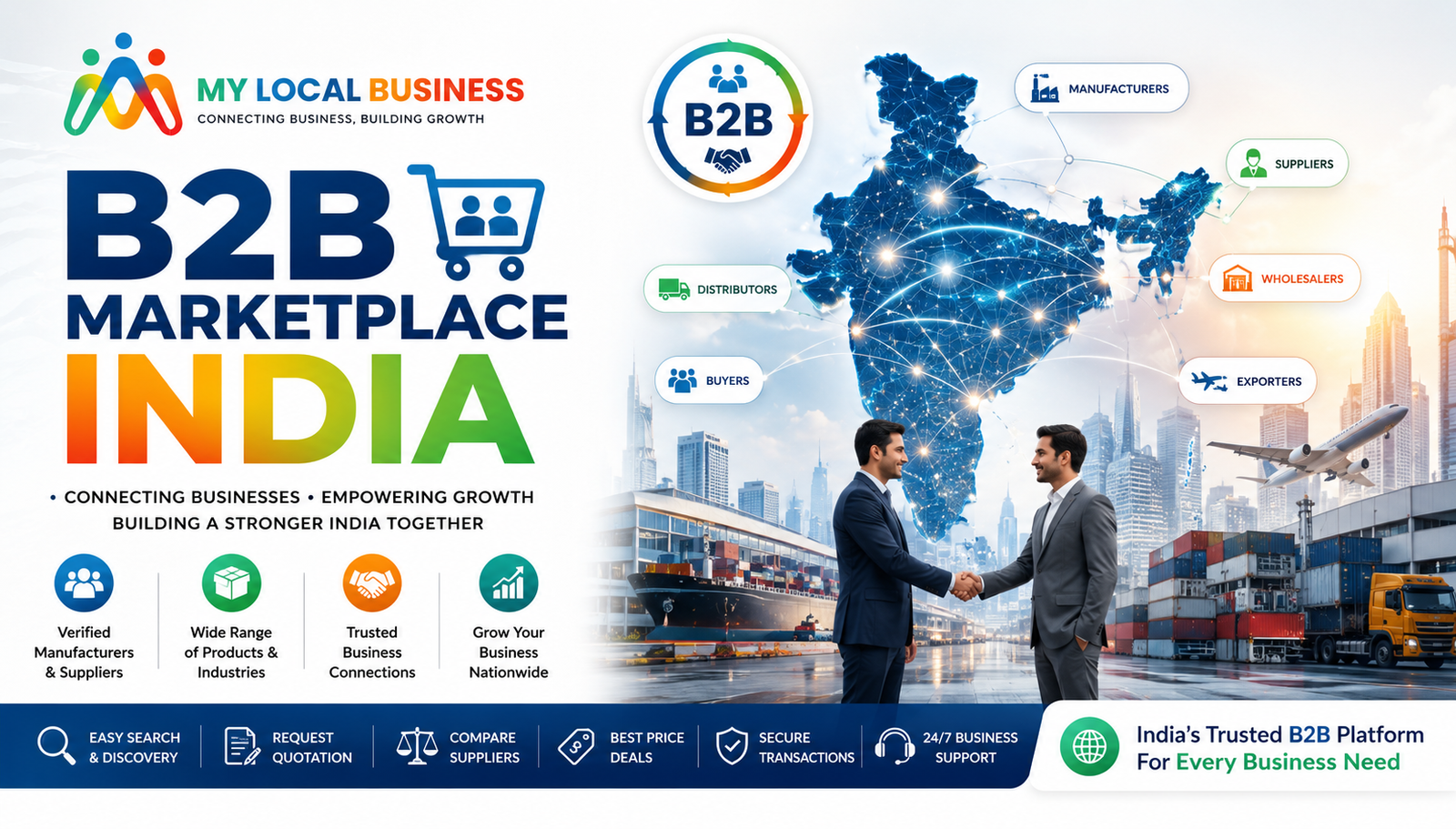
B2Bs are the digital ecosystems with the association of manufacturers, suppliers, distributors, and buyers within a single centralized area. The sites are transparent, efficient, and scalable, unlike the conventional forms of offline trading.
B2B platforms eliminate several barriers that have been present since time immemorial to Indian manufacturers. They make fewer or less reliance on the middlemen, greater access to the market, and access to verified buyers and suppliers. A local or local business in a small or regional scale can be able to exhibit its products at the national level or even international without necessarily investing in the sales infrastructure.Bulk transactions, Differentiated prices, and Long-term contracts also have a place in these platforms and are as such they are suitable to manufacturing requirements.
Empowering MSMEs and Local Manufacturers
Indian manufacturing is made up of micro, small and medium enterprises. However, they are usually suppressed by scarce resources and publicity. B2B platforms are also making a revolution in the field of leveling the playing field of MSMEs.B2B platforms enable the small manufacturers to gain trust within a short period by providing digital storefronts, product catalogs, credibility in form of reviews and ratings. The services also include a lot of logistics organization, online payments, and access to funding with many platforms.
In the case of my local business, this ecosystem eases operation intricacy and enables proprietors of business entities to concentrate on innovation, quality development, and consumer satisfaction in contrast to administration challenges.
Building Stronger and More Resilient Supply Chains
Several supply chains have taken resilience as a priority among the manufacturers. The recent advances in the global processes and demand swings have highlighted weaknesses in the old sourcing models. The flexibility, transparency and diversification is what Indian manufacturers are seeking now.
B2B websites meet these requirements with real-time supplier search, comparison of suppliers and reduced procurement time. They also produce valuable data which are important in assisting the manufacturers to forecast the demand, highlighting risks, and inventory optimization.
B2B platforms will play a critical role in the establishment of agile and resilient supply chains that are able to withstand any future uncertainties as Indian manufacturing becomes more data revolved.Expanding Global Reach Through Digital Platforms
The export of goods and international relationships are the keys to an ambitious project by India to be viewed as an international manufacturing hub. B2B platforms also enable the Indian manufacturers to meet the overseas buyers by facilitating the communication, documentations, and compliance requirements.
Existence in strong digital markets is a plus as far as credibility is concerned in international markets. The manufacturers with the constant update of their profiles, certifications, and the open history of their transactions will have better chances of international clients. This exposure promotes better standards and practices and improvement that are sustainable.
B2B platforms are the opening portals to international expansion to large enterprises as well as my local business manufacturers.
The Future Outlook: Manufacturing and B2B Platforms Together
Collaboration and integration is the way ahead of Indian manufacturing. Factories, technology providers, logistics partners, financial institutions, and B2B platforms will become more and more integrated ecosystems and not independent entities. B2B platforms are changing their orientation to mere marketplaces. They are integrating financial services, advanced analytics, and AI-driven insights into manufacturing strategic partners. These solutions assist companies in maximizing the pricing, cash flows, and emerging markets.Those manufacturers that adopt this digital-first strategy will be in a better place to evolve, compete and dominate in the future.
Conclusion
Indian manufacturing is riding into a new age - one that is digital, innovative, and looks international. On one hand, issues like inefficiencies in the supply chain and market penetration are present, but on the other side, solutions are also being developed at a fast rate.
The centre of this transformation is the B2B platforms. These platforms are transforming the manufacturing environment by empowering the MSMEs, enhancing supply chains, global trade, and boosting the growth of my local business. The manufacturers who embrace and incorporate B2B platform in their approach to the future are not only the ones that survive, but they will succeed in a competitive global economy in India.
Comments (0)
Recent Articles


Jan 15, 2026






No comments yet. Be the first to comment!